
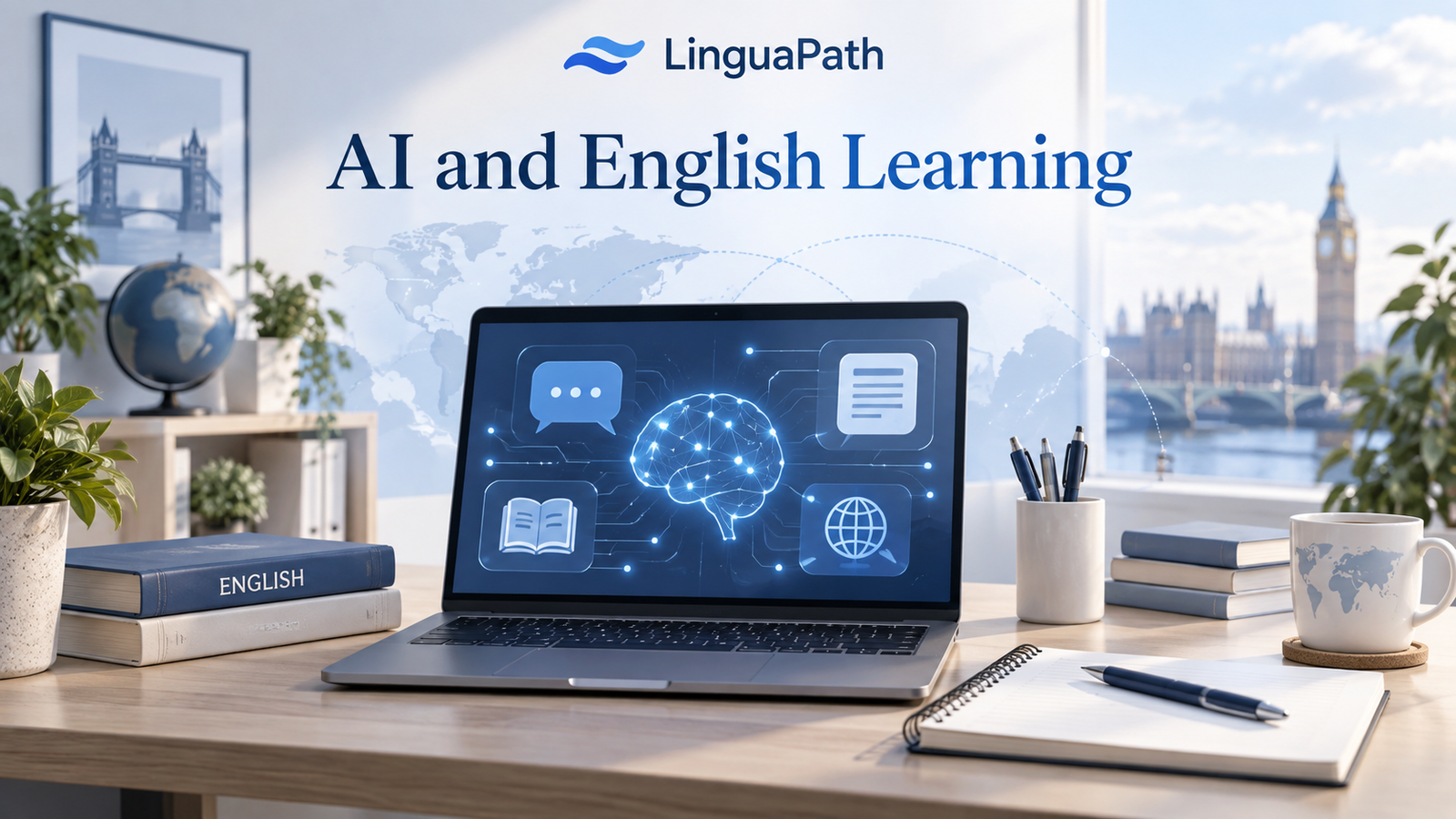
Artificial intelligence has become one of the most talked-about topics in education. Students now use AI to practise English, improve writing and grammar, prepare for speaking, and do many other things. This change is important because the process of learning English is no longer confined to lessons in the classroom, books, or private lessons. Students can get necessary help when they need it, especially quick explanations and extra practice.
Nevertheless, AI is not an absolute solution to all problems. It can help learners, but it cannot replace real effort, regular practice, or human communication. One student may ask an AI program to explain the difference between grammar concepts, offer better vocabulary, or evaluate a short text. Such applications can be helpful, especially for those students who are afraid or ashamed to make mistakes. If used properly, AI can play a crucial role in building learners’ confidence.
One of the best ways to apply AI to English learning is writing practice. For example, a student can write a short email, paragraph, or essay and receive feedback. The learner can then study the corrections and understand why some words or sentences need improvement. This is better than simply copying the corrected version. The real value comes from learning from the mistake, not hiding it.
Furthermore, AI can help in speaking preparation. Students can prepare answers to common questions and topics, including work, hobbies, travelling, plans and personal experience. They can practise pronunciation, develop their thoughts, and memorise useful phrases before speaking with a teacher, classmates, or another person. This preparation can make communication smoother and less stressful.
Still, students should be careful with AI because sometimes it can generate unnatural sentences, wrong explanations, or language that is not suitable for a certain learner’s level. In this case, it is important to use AI not as a supreme guide but only as helpful information. Teachers are still important because they know the levels, weak sides, goals, and preferences of their students. Good teachers can select what is useful for students, explain confusing things, and teach students how to use language naturally.
The future of English learning can include a combination of technologies and teaching because AI can provide speed, examples, and opportunities for practice, whereas teachers can give feedback, encouragement, structure, and real communication. The combination of these elements may help learners to achieve better results.
In conclusion, the main goal of AI is to support the process of learning English. The smartest learners will not depend on AI completely. They will use it wisely, practise regularly, ask questions, speak with real people, and keep improving step by step.


1 Comment
well written