Level: A2 Elementary
Focus: Grammar and Everyday English
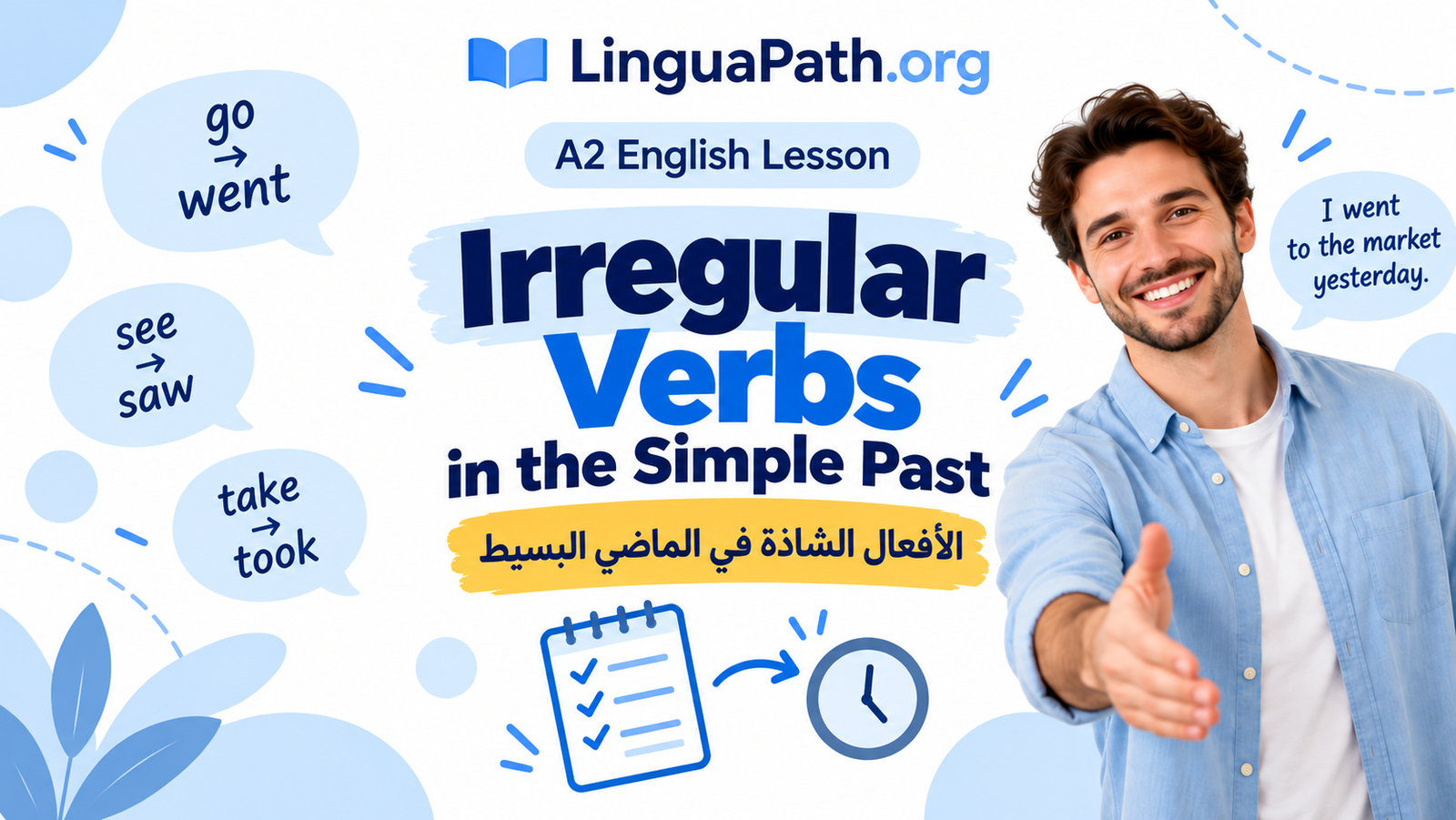
Topic: Irregular Verbs in the Simple Past
Language: English with Arabic Support
Author: Wadi Batyouk
Platform: LinguaPath.org
Irregular verbs are verbs that do not follow the regular “-ed” rule in the past tense.
الأفعال الشاذة هي أفعال لا تتبع قاعدة إضافة “-ed” في الماضي، بل يتغير شكلها.
1. How to Use Irregular Verbs in the Simple Past
كيفية استخدام الأفعال الشاذة في الماضي البسيط
| Form | Structure | Example in English | Arabic Translation |
|---|---|---|---|
| Positive Sentence الجملة المثبتة |
Subject + Past Simple Verb + Object | I went to the market yesterday. | ذهبت إلى السوق بالأمس. |
| Negative Sentence النفي |
Subject + did not (didn’t) + Base Form | I didn’t go to the market yesterday. | لم أذهب إلى السوق بالأمس. |
| Question السؤال |
Did + Subject + Base Form? | Did you go to the market yesterday? | هل ذهبت إلى السوق بالأمس؟ |
Important: After did or didn’t, use the base form of the verb.
✅ I didn’t go.
❌ I didn’t went.
مهم: بعد did أو didn’t نستخدم الفعل في صيغته الأساسية.
2. Common Irregular Verbs in the Simple Past
أشهر الأفعال الشاذة في الماضي البسيط
| Base Form | Past Simple | Example Sentence | Arabic Translation |
|---|---|---|---|
| be | was / were | She was happy yesterday. | كانت سعيدة بالأمس. |
| become | became | He became tired after work. | أصبح متعبًا بعد العمل. |
| begin | began | The class began at 9 AM. | بدأ الدرس الساعة التاسعة صباحًا. |
| break | broke | I broke my phone. | كسرت هاتفي. |
| bring | brought | She brought her friend to the party. | أحضرت صديقتها إلى الحفلة. |
| buy | bought | We bought a new car last week. | اشترينا سيارة جديدة الأسبوع الماضي. |
| choose | chose | They chose the best answer. | اختاروا أفضل إجابة. |
| come | came | He came to my house yesterday. | جاء إلى منزلي بالأمس. |
| do | did | I did my homework. | أنجزت واجبي. |
| drink | drank | She drank a lot of water. | شربت الكثير من الماء. |
| eat | ate | I ate pizza for lunch. | تناولت البيتزا على الغداء. |
| find | found | He found his keys. | وجد مفاتيحه. |
| get | got | I got a gift from my friend. | حصلت على هدية من صديقي. |
| go | went | She went to the park. | ذهبت إلى الحديقة. |
| have | had | I had a great time yesterday. | قضيت وقتًا ممتعًا بالأمس. |
| know | knew | He knew the answer. | كان يعرف الإجابة. |
| leave | left | They left early. | غادروا مبكرًا. |
| make | made | I made a cake. | صنعت كعكة. |
| meet | met | We met last week. | التقينا الأسبوع الماضي. |
| see | saw | I saw a movie yesterday. | شاهدت فيلمًا بالأمس. |
| take | took | He took my book. | أخذ كتابي. |
| write | wrote | I wrote a letter. | كتبت رسالة. |
3. Tips to Remember Irregular Verbs
نصائح لحفظ الأفعال الشاذة في الماضي
Do not only memorize the verb. Use it in complete sentences when you speak or write.
Some irregular verbs change in similar ways. For example: sing → sang and ring → rang.
Write the base form on one side and the past form on the other side. This can make memorisation easier.
Pay attention to irregular verbs when you read stories or listen to English in conversations, films, and other everyday situations.
Lesson Summary
In this lesson, you learned:
- what irregular verbs are
- how to use irregular verbs in positive sentences
- how to form negatives with didn’t
- how to form questions with did
- common irregular verbs in the simple past
- ways to remember irregular verb forms
في هذا الدرس تعلمت:
- ما هي الأفعال الشاذة
- كيفية استخدامها في الجمل المثبتة
- كيفية تكوين النفي باستخدام didn’t
- كيفية تكوين السؤال باستخدام did
- أشهر الأفعال الشاذة في الماضي البسيط
- طرق تساعدك على حفظ الأفعال الشاذة
Continue Learning A2 English
Continue improving your English with practical grammar, vocabulary, conversations, reading, and everyday communication.
واصل تطوير لغتك الإنجليزية من خلال القواعد والمفردات والمحادثات والقراءة والتواصل اليومي.
© LinguaPath. Created by Wadi Batyouk.
LinguaPath.org